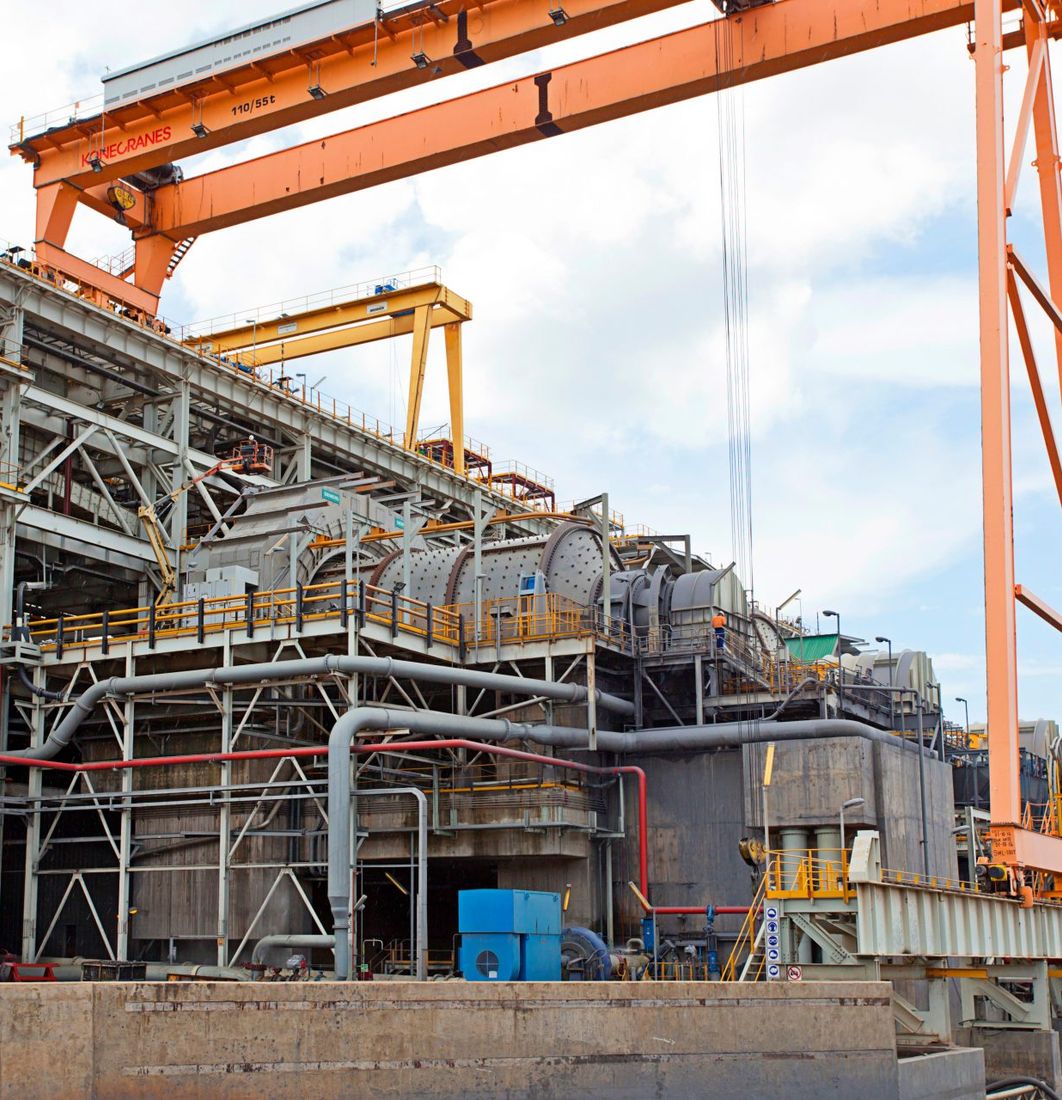
Grinding and flotation, one system
Solutions
Integrated Grinding-to-Flotation

The lowest media wear, or the best result from one flotation stage, is not always the best result for the plant. What happens in the mill changes what reaches the flotation cells.
Overall Objective
Optimise each process individually. Optimise their interaction where they connect.
Find the best overall process outcome, not simply the lowest grinding-media wear or the highest single-stage flotation number.
Grinding media and flotation reagents are often supplied and managed separately, so the interface between them can fall between teams. We look at it on purpose.
Grinding and flotation optimisation are each complete on their own. An integrated program is used where both processes are present and their interaction may change the overall optimum. You do not need to buy both to work with us.
Where leaching follows flotation or grinding, its requirements are treated as a constraint on what “optimum” means upstream. Auday does not offer leaching optimisation as a service.
The Interface
The Grinding-to-Flotation Interface
Grinding inputs
- Media type
- Media chemistry
- Size
- Hardness
- Regrinding strategy
- Grinding conditions
Interface variables
- Particle size
- Liberation
- Fines and slimes
- Mineral surface condition
- Pulp chemistry
- Oxidation-reduction environment
- Dissolved species
- Media-mineral interactions
Flotation response
- Collector interaction
- Kinetics
- Recovery
- Grade
- Selectivity
- Froth behaviour
Grinding optimisation · Flotation optimisation · Research through our alliances