
Grinding Media
High chrome grinding media
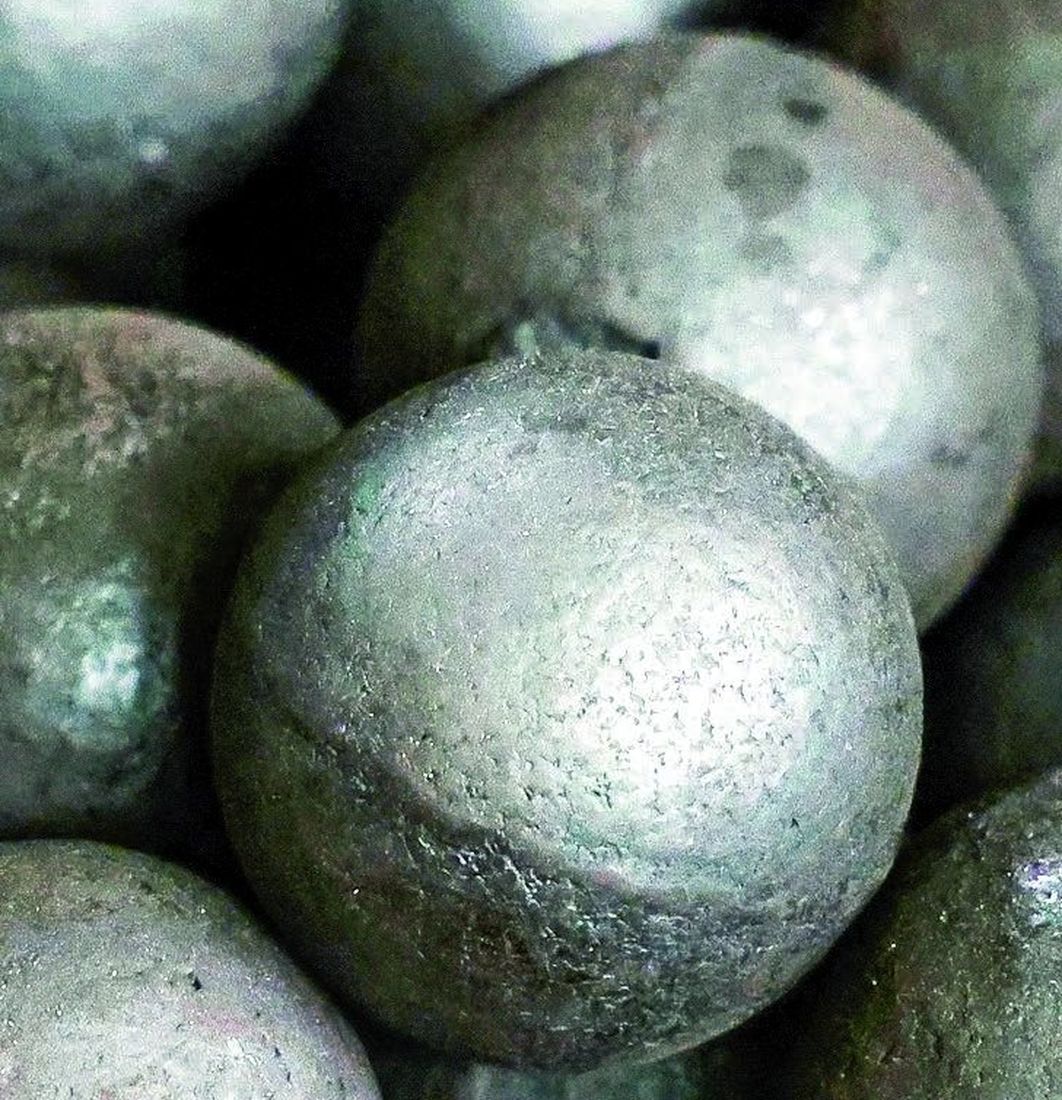
Cast high-chromium balls for abrasive grinding in ball and stirred mills, where wear resistance matters more than impact strength.
Typically used in secondary and regrind ball mills and in stirred mills, where impact is lower and abrasion dominates.
Specification
High chrome grinding media
Specifications are typical ranges. Size, chemistry and hardness are set for each application.
| High chrome grinding media | |
|---|---|
| Size range | 10–130 mm (≈⅜–5 in) |
| Chromium content | Up to 35 % |
| Hardness | 60–68 HRC |
| Manufacturing route | Raw material → melting → casting → heat treatment → quality inspection → sorting → packaging |
| Typical applications | Ball mills, stirred mills |
| Packaging | Bulk, bulk bag, drum |
| Performance factors | |
|---|---|
| Wear | Higher chromium and hardness generally raise abrasion resistance. |
| Toughness | Very hard cast media is less tolerant of high impact, so chromium level and heat treatment are chosen for the mill duty. |
| Process chemistry | Media chemistry can change the pulp environment and mineral surfaces, which may affect flotation downstream. |
Customisation
Size, material design, hardness and manufacturing parameters may be optimised within technically validated and manufacturable ranges. The aim is the right balance of wear resistance, hardness and toughness for the duty, not the hardest or most alloyed ball.
Packaging and supply
Regular communication with site and maintained stock levels reduce the risk of shipping delays reaching the mill.
Quality
The manufacturer is accredited to ISO 9001, ISO 14001 and ISO 45001. Every batch is tested against Auday's specification and the applicable international standards before it leaves the factory.
| Packaging | |
|---|---|
| Bulk | Open-top trucks or half-height containers |
| Bulk bags | UV-resistant polypropylene with lifting straps |
| Drums | Recycled drums on wooden pallets |
Frequently asked questions
What chromium levels are available?
Up to 35 % chromium.
Is high chrome always better than forged?
No. It depends on impact, abrasion and the downstream process; we compare the options on cost per tonne.
Which mills is it used in?
Typically ball and stirred mills.